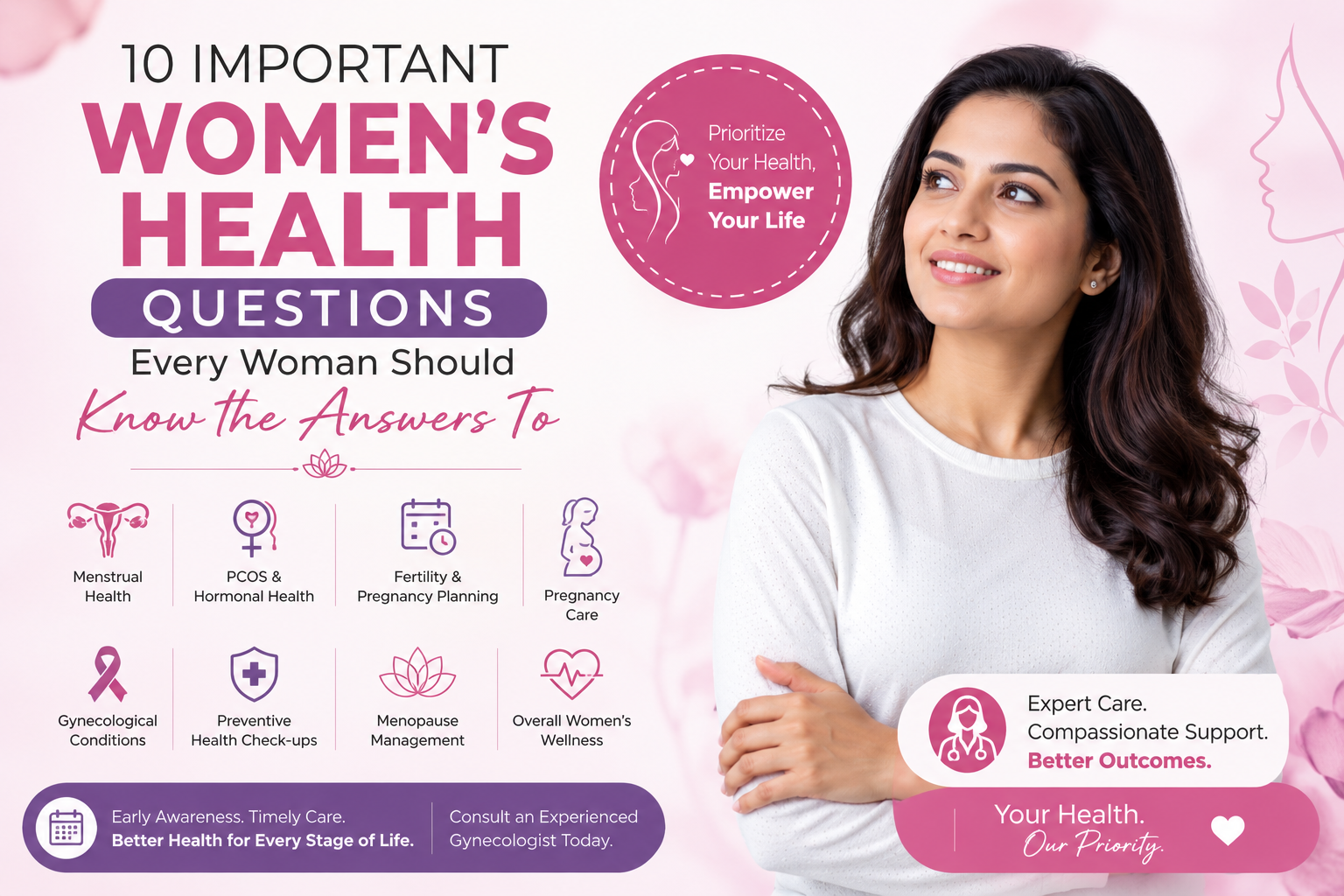
A Women’s body undergoes changes throughout life. From adolescence and reproductive years to pregnancy and menopause, understanding your body and recognizing early signs of health concerns can help you make informed decisions and maintain long-term wellbeing.
Many women delay seeking medical advice because they assume certain symptoms are normal or temporary. However, early awareness and timely medical guidance can often prevent complications and improve overall quality of life.
Here are some of the most important women’s health questions every woman should know the answers to.
1. Are Irregular Periods Always Normal?
Occasional changes in the menstrual cycle can happen due to stress, travel, lifestyle changes, or hormonal fluctuations. However, consistently irregular periods may indicate an underlying condition such as hormonal imbalance, thyroid disorders, polycystic ovary syndrome (PCOS), or other reproductive health concerns.
Tracking your menstrual cycle can help identify patterns and determine whether further evaluation may be beneficial.
2. What Is PCOS and Why Is It So Common?
Polycystic Ovary Syndrome (PCOS) is one of the most common hormonal disorders affecting women of reproductive age. It can influence menstrual cycles, fertility, metabolism, and overall health.
Common symptoms may include irregular periods, acne, weight gain, excessive hair growth, and difficulty conceiving. Early diagnosis and proper management can help reduce long-term health risks.
3. When Should I Start Thinking About Fertility Health?
Fertility health is important long before pregnancy planning begins. Understanding factors that influence reproductive health allows women to make informed choices about family planning and future pregnancy goals.
Age, hormonal health, lifestyle habits, medical conditions, and reproductive history can all influence fertility potential.
4. Why Is Pre-Pregnancy Health Important?
Preparing for pregnancy involves more than simply deciding to conceive. Good pre-pregnancy health supports both maternal wellbeing and healthy fetal development. Nutrition, exercise, weight management, lifestyle choices, and management of existing medical conditions all play an important role in creating a healthy foundation for pregnancy.
5. Are Painful Periods Something to Ignore?
While mild discomfort during menstruation can be common, severe pain that interferes with daily activities should not be ignored.
Persistent menstrual pain may sometimes be associated with conditions such as endometriosis, fibroids, adenomyosis, or pelvic inflammatory conditions that may require medical evaluation.
6. What Causes Fibroids?
Uterine fibroids are non-cancerous growths that develop within or on the uterus. They are not uncommon among women and may vary in size and number.
Some women experience symptoms such as heavy bleeding, pelvic pressure, abdominal discomfort, or fertility challenges, while others may have no symptoms at all.
7. How Often Should Women Prioritize Preventive Health Check-Ups?
Preventive healthcare plays a vital role in detecting health concerns before symptoms become severe. Regular health assessments provide an opportunity to monitor reproductive health, hormonal balance, and overall wellness.
Preventive care is often one of the most effective ways to support long-term health and early intervention.
8. What Changes Should Women Expect During Menopause?
Menopause is a natural stage of life that marks the end of reproductive years. Hormonal changes during this transition can affect physical, emotional, and metabolic health.
Women may experience symptoms such as hot flashes, sleep disturbances, mood changes, and changes in bone health. Understanding these changes helps women manage this phase with greater confidence.
9. Can Lifestyle Choices Affect Reproductive Health?
Yes. Daily lifestyle habits have a significant impact on hormonal balance, fertility, pregnancy outcomes, and overall reproductive wellbeing.
Regular exercise, balanced nutrition, stress management, adequate sleep, and maintaining a healthy weight can positively influence women’s health at every stage of life.
10. Why Is Early Medical Advice Important for Women’s Health?
Many gynecological conditions respond best when identified early. Delaying evaluation can sometimes allow symptoms to worsen or affect overall health and quality of life. Seeking timely medical guidance enables women to better understand their health, explore treatment options when needed, and make informed decisions for the future.
Taking Charge of Your Health
Women’s healthcare extends beyond treating illness. It involves education, prevention, early detection, and ongoing support through every stage of life.
Whether you are navigating adolescence, planning a family, managing hormonal concerns, experiencing pregnancy, or transitioning through menopause, staying informed about your health is one of the most valuable investments you can make in your future wellbeing.