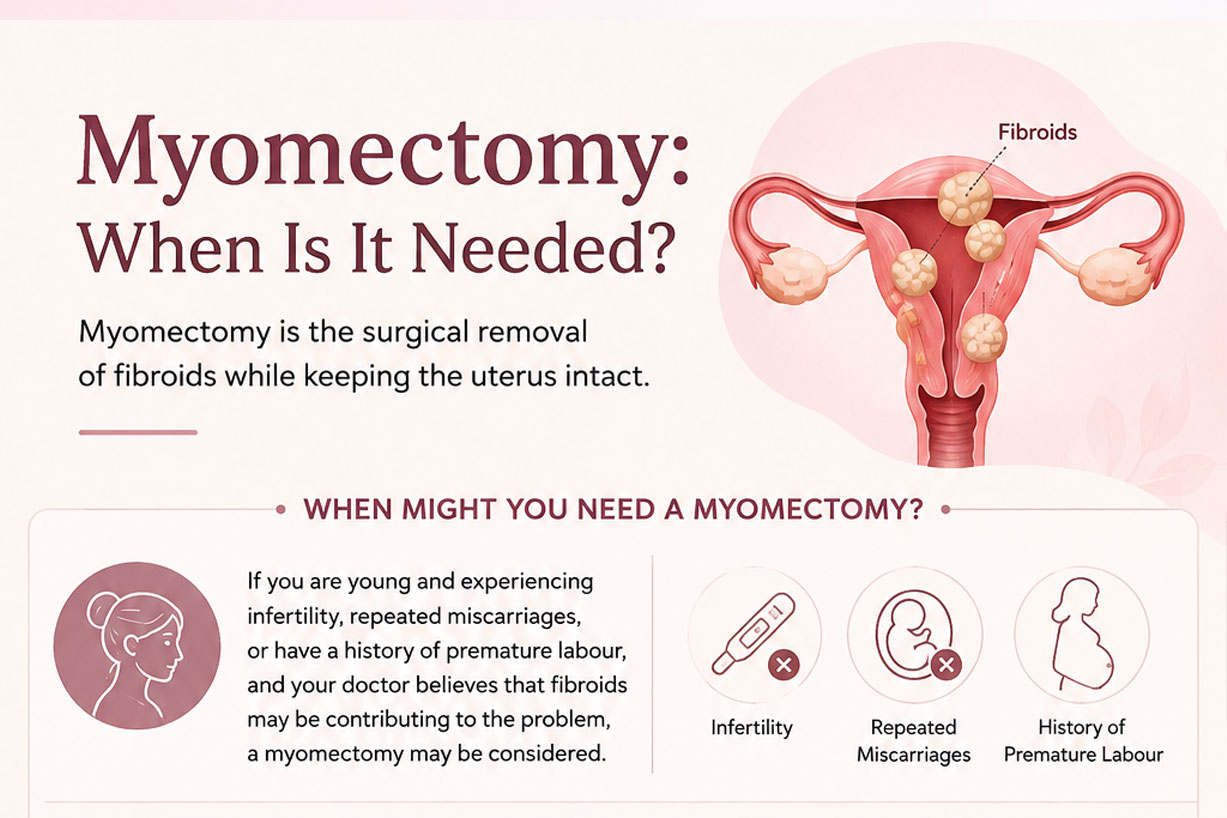
It may be considered for women whose fibroids are causing symptoms or are suspected to be affecting fertility or pregnancy.
Dr. Anita Gupta, Additional Director of Obstetrics & Gynaecology at Fortis La Femme, Greater Kailash, Delhi, explains when myomectomy may be considered, particularly in women who are planning pregnancy.
What Is Myomectomy?
Myomectomy is a surgical procedure in which uterine fibroids are removed while the uterus is preserved.
Fibroids are non-cancerous growths that develop in or around the uterus.
Depending on their size, number and location, they may cause heavy menstrual bleeding, pelvic pressure, pain, infertility or pregnancy-related complications.
Unlike a hysterectomy, myomectomy does not remove the uterus and may therefore be an option for women who wish to preserve their fertility.
When Might You Need a Myomectomy?
Myomectomy may be considered when fibroids are causing significant symptoms or may be contributing to reproductive problems.
It may be discussed when a woman has:
- Fibroids associated with infertility
- Recurrent pregnancy loss where a fibroid is considered a possible contributing factor
- Fibroids that may interfere with implantation or the uterine cavity
- Significant or heavy menstrual bleeding
- Pelvic pressure or pain caused by fibroids
- Large or multiple fibroids causing symptoms
- Fibroids that may affect pregnancy or its outcome
Can Myomectomy Help With Infertility?
In selected women, removing a fibroid may improve the chances of conception or pregnancy, particularly when the fibroid distorts the uterine cavity or is otherwise considered likely to be affecting fertility.
However, infertility can have many causes. A complete fertility evaluation is important before deciding whether myomectomy is appropriate.
Can You Get Pregnant After a Myomectomy?
Yes. Many women can become pregnant after myomectomy.
However, the appropriate time to start trying for pregnancy depends on factors such as:
- The type of myomectomy performed
- The size and number of fibroids removed
- The depth of the uterine incision
- Whether the uterine cavity was entered
- How the uterus heals after surgery
Your gynaecologist will advise you when it is appropriate to start planning a pregnancy after surgery. There is no single waiting period that applies to every woman.
Will You Need a Caesarean Section After Myomectomy?
Not every woman who has undergone myomectomy automatically requires a Caesarean section.
The mode of delivery depends on the details of the previous surgery, including the location and depth of the uterine incisions and whether the uterine cavity was entered.
Because some types of uterine surgery can increase the risk of uterine rupture during labour, your obstetrician will review your previous surgical records and recommend the safest mode of delivery.
What If You Are Over 40 and Have Multiple Fibroids?
For women over 40 who have completed their family and have multiple or symptomatic fibroids, several treatment options may be considered.
In some situations, hysterectomy may be a more appropriate option than myomectomy, particularly when fertility preservation is no longer required and fibroids are causing significant symptoms.
However, treatment should always be individualised. The decision depends on symptoms, fibroid characteristics, reproductive plans and overall health.
Myomectomy vs Hysterectomy
The main difference between the two procedures is whether the uterus is preserved.
| Myomectomy | Hysterectomy |
|---|---|
| Removes fibroids | Removes the uterus |
| Uterus is preserved | Uterus is not preserved |
| May preserve future pregnancy potential | Pregnancy is no longer possible after surgery |
| Suitable for selected women who wish to preserve the uterus | May be considered when childbearing is complete |
| Fibroids can potentially recur | Fibroids cannot recur in a removed uterus |
The right procedure depends on your individual circumstances and should be decided after a detailed gynaecological evaluation.
Frequently Asked Questions About Myomectomy
1. Is myomectomy the same as hysterectomy?
No. Myomectomy removes the fibroids while preserving the uterus. Hysterectomy involves removal of the uterus.
2. Does every woman with fibroids need myomectomy?
No. Many fibroids do not require surgery. Treatment depends on symptoms, fibroid size, number, location and reproductive plans.
3. Can fibroids cause infertility?
Some fibroids can affect fertility, particularly those that distort the uterine cavity. However, fibroids are only one of many possible causes of infertility.
4. Can I become pregnant after myomectomy?
Yes. Pregnancy is possible after myomectomy for many women. Your doctor will advise you about when it is safe to start planning pregnancy.
5. How long should I wait before becoming pregnant after myomectomy?
There is no universal waiting period. The recommended interval depends on the type and extent of surgery and how the uterus heals. Your gynaecologist should provide individual advice.
6. Will I definitely need a Caesarean after myomectomy?
No. A Caesarean section is not automatically required after every myomectomy. The decision depends on the surgical details and the condition of the uterus.
7. Can fibroids come back after myomectomy?
Yes. Myomectomy removes existing fibroids, but it does not eliminate the possibility of developing new fibroids in the future.
8. Is myomectomy suitable after the age of 40?
It can be suitable in selected women. If a woman has completed her family and has multiple or symptomatic fibroids, other options, including hysterectomy, may sometimes be considered.
9. What symptoms can fibroids cause?
Fibroids may cause heavy or prolonged periods, pelvic pain or pressure, frequent urination, abdominal enlargement and, in some women, fertility or pregnancy-related problems.
10. How do I know whether I need myomectomy?
A gynaecologist can assess your symptoms, ultrasound or imaging findings, fibroid size and location, fertility plans and medical history before recommending treatment.
When Should You See a Gynaecologist?
You should consider a gynaecological evaluation if you have:
- Very heavy or prolonged periods
- Persistent pelvic pain or pressure
- A known diagnosis of fibroids
- Difficulty conceiving
- Recurrent pregnancy loss
- Fibroids discovered during fertility evaluation
- Fibroids during pregnancy
- Increasing abdominal or pelvic symptoms
Early evaluation can help determine whether observation, medication, minimally invasive treatment or surgery is appropriate.
Expert Gynaecological Care in Delhi
Dr. Anita Gupta is a senior Gynaecologist & Obstetrician in Delhi with extensive experience in women’s health, infertility, pregnancy care and gynaecological surgery.
She consults at Fortis La Femme, Greater Kailash, New Delhi
Book a Consultation
If you have been diagnosed with uterine fibroids and are considering pregnancy or fibroid treatment, consult a gynaecologist to understand the most appropriate treatment options for your individual situation.
Dr. Anita Gupta
Additional Director – Obstetrics & Gynaecology
Fortis La Femme, Greater Kailash, New Delhi
Phone:
+91 9560488202
Key Takeaway
Myomectomy can remove uterine fibroids while preserving the uterus, making it an important treatment option for selected women who wish to maintain their fertility.
However, surgery is not required for every fibroid, and the decision should be based on the fibroid’s characteristics, symptoms and the woman’s reproductive plans.